Unlocking the Potential of SLS Printing with the Formlabs Fuse Series

Placeholder

Ready for an adventure? Take a dive into my world of photography from exotic locations around the globe – from places like Zambia, Morocco, and more! All photos shot on the Canon EOS 5D. Feel free to reach out and connect with me!

Post Time

Ready for an adventure? Take a dive into my world of photography from exotic locations around the globe – from places like Zambia, Morocco, and more! All photos shot on the Canon EOS 5D. Feel free to reach out and connect with me!

What is SLS Printing?

Selective Laser Sintering (SLS) is a type of additive manufacturing that uses a high-powered laser to fuse small particles of polymer powder into a solid structure. Unlike other 3D printing methods, SLS doesn’t need support structures, as the surrounding powder provides the necessary support during the printing process.

Benefits of SLS Printing with the Formlabs Fuse Series

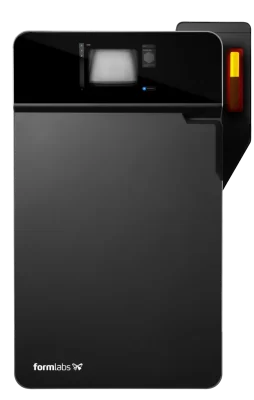
  1. No Support Structures Needed: One of the standout features of SLS printing is that it doesn’t require support structures. This allows for the creation of complex geometries and interlocking parts that would be challenging or impossible with other methods.
  2. High-Quality and Durable Parts: SLS parts are known for their excellent mechanical properties. They are strong, durable, and suitable for functional prototypes and end-use components. The Fuse Series printers produce parts that are isotropic, meaning they have uniform strength in all directions.
  3. Efficient Material Usage: The unused powder in SLS printing can be recycled for future prints, reducing waste and material costs. This makes SLS a cost-effective option for small to medium-scale production runs.
  4. Wide Range of Materials: The Fuse Series supports a variety of materials, including nylon (PA12 and PA11), glass-filled nylon, and TPU. Each material has unique properties, making SLS suitable for a wide range of applications, from automotive parts to medical devices.
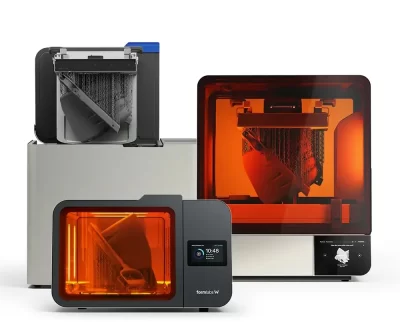
  5. User-Friendly Operation: Formlabs has designed the Fuse Series to be user-friendly and accessible. The Fuse 1 and Fuse 1 + 30W are compact, easy to set up and require minimal maintenance. The Fuse Sift and Fuse Blast streamline the post-processing workflow, making it easier to remove excess powder and clean parts.

Comparing SLS to Other 3D Printing Methods

  1. Fused Deposition Modeling (FDM): FDM is the most common type of 3D printing, known for its simplicity and affordability. However, FDM parts often lack the strength and precision of SLS parts. FDM is best suited for quick prototyping and low-cost models.
  2. Stereolithography (SLA): SLA uses a laser to cure liquid resin into solid parts. It offers high-resolution and smooth surface finishes but can be limited by the brittleness of the materials used. SLA is ideal for detailed models and prototypes but may not be as durable as SLS parts.
  3. Multi Jet Fusion (MJF): MJF is similar to SLS in that it uses powder-based materials, but it employs a different process to fuse the power. MJF can produce high-quality parts quickly and is often used for production runs. However, SLS can be more cost-effective for smaller batches.
The Formlabs Fuse Series has unlocked the potential of SLS printing, making it accessible to a wider audience and enabling the creation of high-quality, durable parts with complex geometries. Whether you’re in the automotive, healthcare, or consumer goods industry, the Fuse Series offers a versatile and efficient solution for your 3D printing needs. By understanding the benefits and unique features of SLS technology, you can make informed decisions and leverage the full potential of the Formlabs Fuse Series.

Ready to explore the possibilities of SLS printing with the Formlabs Fuse Series?

Start your journey today and unlock new levels of innovation and efficiency in your production process.

TRENDING POSTS