Unlocking New Possibilities in Drone Manufacturing with HP MJF Technology

Placeholder

Ready for an adventure? Take a dive into my world of photography from exotic locations around the globe – from places like Zambia, Morocco, and more! All photos shot on the Canon EOS 5D. Feel free to reach out and connect with me!

Post Time

Ready for an adventure? Take a dive into my world of photography from exotic locations around the globe – from places like Zambia, Morocco, and more! All photos shot on the Canon EOS 5D. Feel free to reach out and connect with me!

1. Enhanced Performance and Durability

HP MJF technology allows for the production of drone components with exceptional strength and durability. By utilizing thermoplastic polyurethane (TPU) materials, drones can withstand high-impact crashes and demanding operational conditions. This resilience is crucial for first-person view (FPV) drones, which require robust parts to maintain performance during intense maneuvers.

2. Complex and Lightweight Drones

One of the standout features of HP MJF technology is its ability to create intricate and lightweight designs. This capability is particularly beneficial for drones, as it enables the production of components that are both strong and lightweight, enhancing flight efficiency and battery life. The voxel-level control offered by MJF ensures precise manufacturing of complex geometries that traditional methods cannot achieve.

3. Speed and Cost Efficiency

HP MJF technology is renowned for its speed, being up to 10 times faster than other 3D printing methods. This rapid production capability allows drone manufacturers to bring new products to market faster, reducing lead times and costs. Additionally, the ability to produce multiple parts simultaneously in one build further enhances efficiency and cost-effectiveness.

4. Versatility in Applications

HP MJF technology is versatile and can be used to produce a wide range of drone components, from structural parts to intricate internal mechanisms. This flexibility allows manufacturers to optimize every aspect of drone design, ensuring that each component contributes to the overall performance and reliability of the drone.

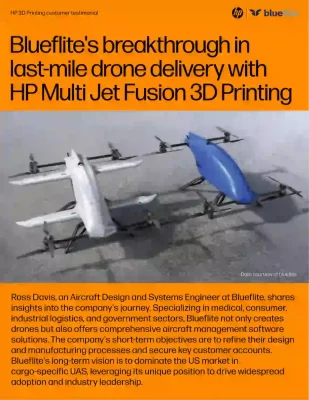
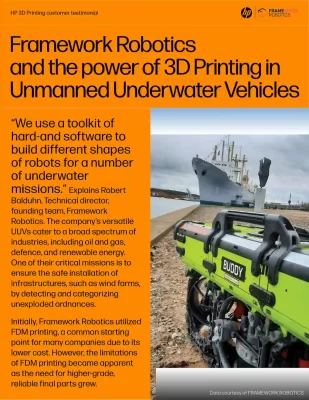
Check out these case studies

TRENDING POSTS